Through hulls and shutoff cocks - part II

Hello fellow Nonsuchers;

Was down on our boat yesterday (5 hour round trip) and brought home
the raw water inlet valve for measurement and replacement (as per
survey) on our new-to-us NS26C.

Ok. All through-hulls are straight thread. This one is a tapered
(pipe) thread. You can see where it sat down only with about 3 threads
engaged. I think the shutoff cocks are ALL like this on this boat -
tapered (NPT) into straight (NPSM) threads.

IS this the way it's done? It gives me the willies, but I do have to
remember that lots of my previous hobby work is with steam at up to
250psi, Schedule 80 pipes and fittings. We are not dealing with this
pressure, of course.

The Marelon ones are straight thread, but don't have the required 7/8
tailpiece available, so I'll have to machine one up. Maybe I'll fit a
water filter while I'm at it.

Any back-patting "it's ok John" comments (or others) welcome :wink:

John A. Stewart
NS26C #046
under cover in Kingston ON.

Welcome to the Nonsuch club, John. That doesn’t mean that our wonderful vessels are replete with all sorts of non-standard plumbing, electrics, etc. It just means “Welcome !!”. You have purchased a great boat.

I cannot answer your question. Shame on me, but in 5 years of owning Moustaches, I’ve never removed a thru-hull. They all operate fine. But, shame on me … I will pat you on the back for your work with small-scale steam locos and all that and being able to “machine” things. Now THAT’S fussy work - good on you.

Take care,

Ernie A. in Toronto

Hi John
Just to fill in some blanks on my end - the through hull is bronze? 1 inch NPSM threads?
The old shut off is a gate valve made of bronze? Iron? and it has 1 inch female NPT threads on both ends? I removed the old ones years ago but I think they were dull grey and I don’t remember what they were made of. Also not sure of the size.

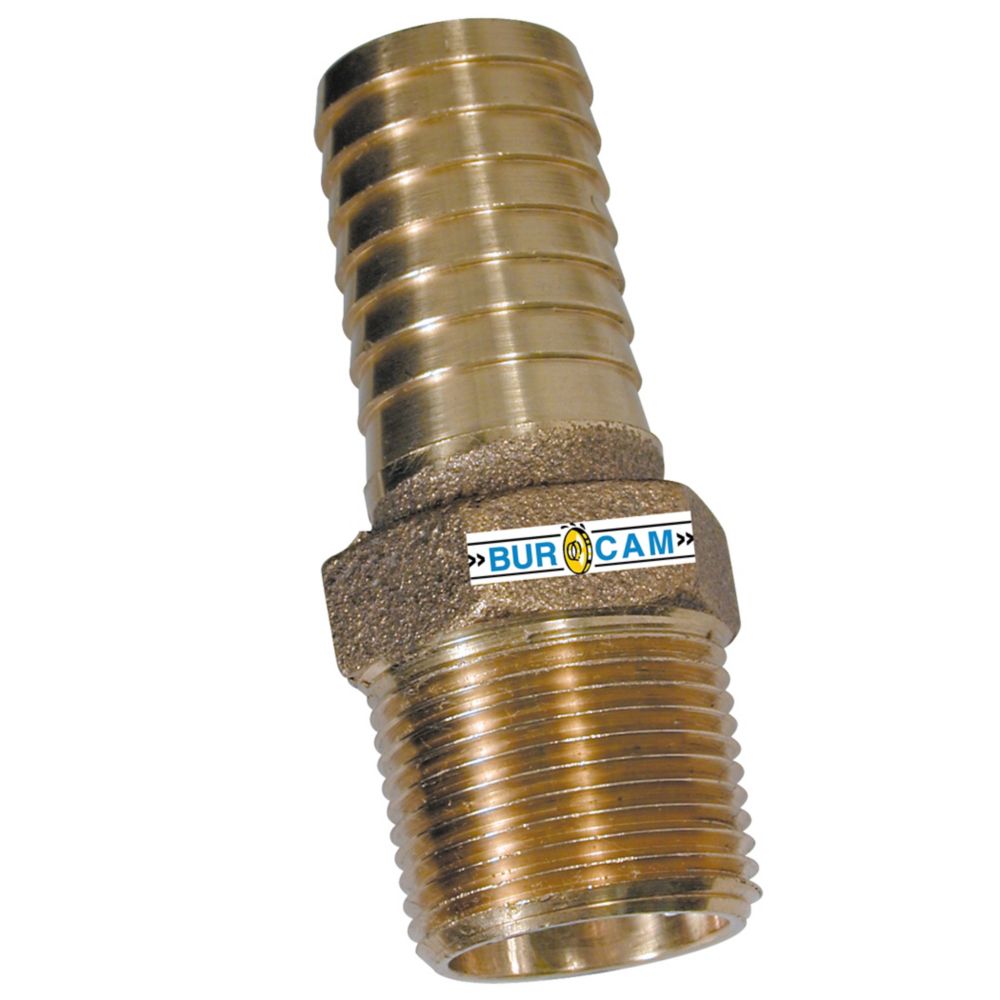
The 7/8ths tailpiece is 1 inch to 7/8 tailpiece?1 Npt X 1 B Bronze Adapter

The thread last week got me worried. I looked up the chart on galvanic series again. In the table the marine brass was about the same level as bronze but what got me worried is that iron and steel are much closer to zinc than the brass and I capped off my most forward through hull with a
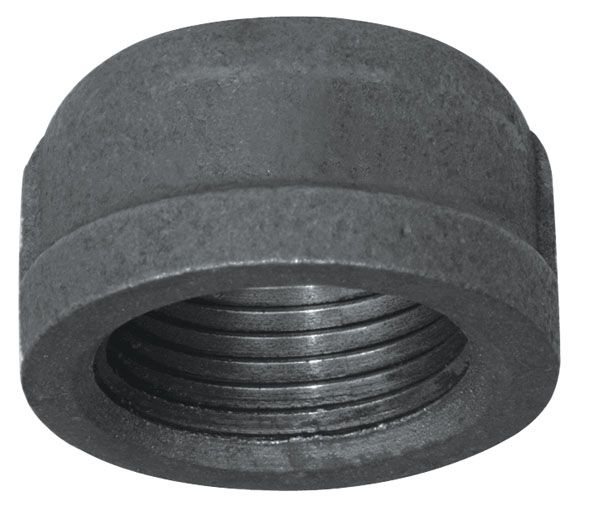
Fitting Black Iron Cap 1 Inch

1 inch black iron cap. This on bronze may not have been the best idea. I will have to go and look at it.

Yes pressure on these fittings is no problem but corrosion and ice are.

Tom 26 C #28 North Star
Penetang

Hi Tom;

Preface - this is a new boat to me, and it’s been 20+ years since I owned one. Apologies for the paragraph numbering, but I find this helps me, at least. Also, I’m no expert in this stuff, so don’t take what follows as gospel.

Tom, I’d not use an iron (cast, or steel alloy) cap. It’d probably last a lifetime, but if there’s a problem, the Insurance company might(?) spoil your day. Yes, check them when the boat’s out of the water and make a note in your log book. If you think they are ok, then, fine. The higher the “schedule” the thicker the pipe, so these things come in different strengths. IIRC, Schedule 40 is used in hot water heater systems, and these last a couple of decades, at least, but have an oxygen-starved closed loop system. I have no idea how they’d fare in Lake Ontario water.

(spoiler alert, go to paragraph 9 below for the condensed version)

  1. Pipe taper threads (“pipe”, NPT) where they are kind-of ice-cream-cone shaped. They taper, and, kind-of self seal. You can only screw them in, until tight, and they won’t go much further. LOTS of plumbing stuff is this way; black iron water pipe, etc, etc, so you’ll see it everywhere. (note that “1/2 inch” is NOT the outside diameter, but the inside diameter; the gate valve has a 1/2" diameter hole through it when open)

  2. Think about through hulls. They go in from the outside, and, on the inside, a large nut and washer screws down on the through-hull, until it’s tight. Think of a large bolt and nut. These are parallel threads.

  3. ON MY BOAT, I removed the Bronze-cast raw water shutoff, and brought it home with me. I measured it with a dial caliper (“eye balling” it), and came up with a thread OD of 21mm, 14tpi. (apologies for the metric - these are from my notes) It’s actually a really well made valve, but see item 9.1) below.

  4. NPSM threads, 1/2 NPSM, major diameter 0.823 inches, = 20.9mm. (ref https://www.engineersedge.com/fluid_flow/straight_pipe_threads_13376.htm) That’s really close to my eyeballing of 21mm. Note, as with NPT, the ID is the size, so it’ll have a 1/2" minimum hole in it.

  5. 1/2" NPT is 14 threads per inch (TPI) as is 1/2" NPSM. So, they fit, but think about putting the end of an ice-cream cone in to a deep hole, it’ll fit, but the engagement is only a short bit where you can see it. Maybe people attack the parallel thread end with a file, but that’ll only affect the outside thread crests, not the minor diam.

  6. Marelon shutoff valves. Ordered some today. From the manufacturers’ site:
    (ref https://www.forespar.com/products/boat-marine-plumbing-ball-valve-thru-hull.shtml)

note the sentence “All valves sold throughout the U.S.A. have standard NPSM type threads. If specified, B.S.P. threads are available on valves sold outside of North America.” Also, their “tech tip” on thread forms says “… thru-hulls all have a parallel threads. They are “NPSM” style threads but are not tapered…”

  1. I ordered Marelon 905100 ball valve(s), and some tail-pieces. I think the water intake valve (stuck) in the bilge for the foot pump is also this size. (I’ll find out in the spring when I’m down at the boat) Note the next paragraph about the tail piece, as I don’t think finding a commercial replacement will be easy.

  2. 7/8" tail piece. I measured the diameter of mine at 21.25mm. Note that 7/8" is 22.22mm, so smaller by about the thickness of a dime. The hose comes off easily. I think it has an NPSM thread on the end, but have not unscrewed it and looked at it. I have the machinery to replicate this stuff, so will likely pick up some certified bronze of a known composition, and will machine one up. Deciding on what alloy I’d prefer. (i.e. not something of unknown composition from my scrap box)

8.1) Sure, if I’m making 1, making a couple more is not a problem.

  1. Does mixing the straight and tapered threads matter? Probably not. However,

9.1) A marine survey suggested replacing the gate valve with a ball valve (do not ignore advice from professionals) and:
9.2) I did find that, when working on my W13 diesel, that the through-hull was always in the way, and easily bumped. With my luck, I’d bump it, and it’d break due to small amount of thread engagement. So, I’m changing it, and will make the replacement fit well.

There you go! Yes, too much information above, but… If I did not answer your questions properly, please ask again, and I’ll try to do better.

John A. Stewart
NS26C #046
On the hard at Kingston, ON.

Arrgh! I found an un-answered question from you:

Tom - on my boat, the through-hulls below the water line are bronze. Hull #46, but I did read that Marelon ball valves were used on some later boats, so maybe later builds had something else? Anyone know?

John A. Stewart
NS26C #046

On the hard at Kingston, ON.
My 1986 30U has Marlon valves.


From: John Alexander Stewart
Sent: Monday, November 5, 2018 3:02 PM
To: INA-Nonsuch-Discussion-Group@googlegroups.com
Reply To: INA-Nonsuch-Discussion-Group@googlegroups.com
Subject: Re: Through hulls and shutoff cocks - part II

|

  • |

Arrgh! I found an un-answered question from you:

Tom - on my boat, the through-hulls below the water line are bronze. Hull #46, but I did read that Marelon ball valves were used on some later boats, so maybe later builds had something else? Anyone know?

John A. Stewart
NS26C #046

On the hard at Kingston, ON.
Thanks John

No you are right, I will for sure look at and replace the iron cap. This is obvious now. Info from the list has saved me a few times.

I’ll also take off at least one of the brass valves and have a close look, though I know they still look brand new and operate as new. The thread engagement is another question.

I also have the W13, the position of this through hull has never caused me concern. I close this valve every time I leave the boat for more than one day. Forces me to look at the fluid levels when I come back and have to open it. After 37 years this engine still runs like a fine watch but with far more noise and vibration.

Thank you for the info.

Tom

My 1983, 26C has all Marlon

Hi Tom, lots of good advice. A very good tutorial on this subject is found at Compass marine How To articles. Google that and you should get the site. R C Collins the creator of the site is an excellent marine technician and presents great material on his site. A must for everyone doing their own work or dealing with a marine mechanic. Will help you understand what they are doing and how it should be done.

Rob Powers
Respite 26C #50
Sidney BC

Hi all;

  1. I’ll second Rob’s advice re: the Compass Marine How To articles. I read his butyl tape article a while ago and printed it for reference; all of his advice seems good.

  2. Ok - through hull shutoff valves.

I didn’t touch mine on the new-to-us 26C, until it was out of the water. If I was going to break something, might as well wait the month until the boat was out of the water. I know my luck on these things. (smile)

I’m focusing on two through hulls for the winter - the raw water intake, and the foot pump intake.

The gate valve for the engine had a through hole of 1/2", which is to be expected from the 1/2" pipe specification. It unscrewed easily from the through-hull, and was held on by a couple (maybe 3) threads; taper onto a straight thread. The home-made (Hinterhoeller?) tail piece appears straight threaded, and also screwed in by a couple of threads into the taper gate valve. (the tail piece needs a good cleaning)

Two issues I see here;

  • the mis-matching threads (solved by the Marelon valve I got in the mail late yesterday);
  • the small opening through the gate valve. The 7/8ths hose has just over 3x the area of the gate valve, and the install instructions say something like “keep all fittings the same size”. So, (in theory) the through-hull valve is way too small for the engine. Have not measured the Marelon bore, but I doubt it’ll be much larger, if at all.

I’m going to leave it as it stands for now (with new Marelon ball valve, of course) but if I ever need to re-engine her, then that through-hull will be larger, and likely bolted. Advice here from others would not be dismissed.

Having fun -

John A. Stewart
NS26C, #046
missing a valve on the raw water intake;
in it’s cradle in Kingston ON.

Hi John;
I just removed a 1" Marelon valve with a broken handle. After a lot of online research and weeding out the articles that didn’t ring right, several points floated to the surface. Yes, Forespar uses NPSM (straight) thread because the valve can be screwed down and bottomed out to the through-hull’s nut. That reduces bending moments on the through-hull section. Forespar recommends cutting the through-hull to length for this reason. Look for their videos. Also, the size of the pipe, e.g. 1", has nothing to do with anything you can measure, look online for those dimensions. Surveyors seem to like Marelon now, it has passed the test of time, regardless of water absorption and material weakening levels. As for thread sealing, no one commits to specific products other than “sealing tape or compound”. I read that as Teflon tape. It is low pressure (<0.1bar) so not about to explode. Lubrication is an issue, Forespar recommends their product (surprise!), Marlube, about C$20. If not, use a lithium lube without any petroluem in it as that can eat seals. Have fun working it onto both surfaces on the ball valve. The best advice seems to be to open and close the seacocks a few times every month - which I didn’t do and here we are replacing seacocks.
Alan & Tracy
Corvus NS30C #216 Toronto